Filterability & SciLog® Pump Training
Join us for a comprehensive Filterability & SciLog® Pump Training designed for professionals in biopharmaceutical, pharmaceutical, and process development fields. This one-day seminar provides hands-on experience with the Parker SciLog® FilterTec™ Gen II Pump, enabling participants to gain practical skills in filtration testing, process optimization, and troubleshooting. Attendees will explore filterability fundamentals, data-driven process decisions, and regulatory best practices, giving them the confidence to apply filtration knowledge in real-world settings. The date for the seminar will be announced soon.
Hands-On Demo with Parker SciLog® FilterTec™ Gen II
Participants will receive direct, hands-on training with the Parker SciLog® FilterTec™ Gen II Pump, performing real-time filtration experiments.
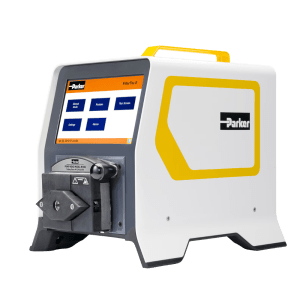
- Live Filterability Study
The live filterability study provides an in-depth look at evaluating filter performance under real-world conditions. Attendees will measure key parameters like flow rate, pressure differential, and filter integrity, and learn to interpret results to make data-driven process improvements. This session bridges the gap between theory and practice, showing how filtration data informs decision-making in biopharmaceutical and pharmaceutical applications.
- Importance of Data Integration
Effective filtration depends on capturing, analyzing, and integrating data into broader process workflows. We will highlight how integrating filtration data enhances process transparency, scalability, and consistency, from bench-scale experiments to GMP production. Participants will learn strategies for using data to optimize filtration, troubleshoot efficiently, and ensure reproducible results.
Filtration Selection Process
Selecting the right filter is essential for product quality, efficiency, and yield. Attendees will explore how to evaluate filter types, materials, pore sizes, and operating conditions, learning to make decisions that ensure smooth operation and optimal performance.
- Common Problems and Solutions
Filtration doesn’t always go as planned. We’ll discuss typical challenges, from clogging and fouling to pressure drops and inconsistent flow, and provide practical solutions and preventive strategies to keep your processes running reliably.
- Scaling Factors (Bench → GMP)
Taking a process from lab bench to full production requires careful attention. You’ll learn how to analyze bench-scale data, evaluate pilot-scale performance, and ensure consistent results at GMP scale, so your processes scale efficiently without compromising product quality.
Filtration Fundamentals
We’ll cover the core principles of filtration that underpin every successful operation. Topics include depth versus membrane filtration, micron ratings, void volume, and filter efficiency, providing a strong foundation for effective process decisions.
- Depth vs. Membrane Filtration
Understand the differences in mechanisms, applications, and performance between depth and membrane filters, and when to use each in your process.
- Micron Ratings, Void Volume, and Efficiencies
Learn how micron rating, void volume, and filter efficiency impact filtration performance and product quality.
- Optimizing a Filtration Train
We’ll explore strategies for designing and optimizing a filtration train, from sequencing filters to balancing flow and pressure. You’ll learn techniques to maximize throughput, reduce waste, and maintain product integrity.
- Validation and Regulatory Considerations
Regulatory compliance is critical in biopharmaceutical manufacturing. This section covers validation protocols, documentation practices, and regulatory expectations, helping you align filtration processes with FDA, EMA, and industry standards.
Stay informed about the latest Filterability & SciLog® Pump Training updates. Signup to receive notifications.